Pages

Showing posts with label Independent News. Show all posts

Wednesday, 6 July 2011

News International and the death of ethics in journalism


Fresh allegations that private investigators paid by the News of the World hacked into the phones of families of victims of the 7/7 bombings as well as relatives of the girls killed in the Soham murders have plunged British journalism deeper into crisis.

The phone hacking scandal escalated on Monday when The Guardian reported the phone of murdered teenager Milly Dowler had been hacked and some of her messages deleted by an investigator hired by the News of the World while she was still missing.

Now, the Metropolitan Police have contacted the families of Holly Wells and Jessica Chapman, who were murdered by Ian Huntley in Soham in 2002, the same year as Milly Dowler, to say their phones might also have been accessed by the tabloid newspaper.

The House of Commons was due to discuss the developments in an emergency debate today (Wednesday) as a campaign for a public inquiry is launched in the House of Lords.

“What has happened is News International has built up a surveillance system that is more potent than anything the police have available. I’m very distressed by what’s happened, it’s appalling. It’s even worse that it has taken since 2002 to come to light,” says Duncan Williams, chairman of Independent News Ltd, the regional newspaper and magazine publishing company which operates a positive news editorial policy.

“Something has gone wrong and people are actually appalled by the latest allegations. It’s an outrageous abuse of the privilege of working in the media.”

In an exclusive interview with Seeker News’ online video channel, Mr Williams highlighted the serious implications for British journalism.

“The media today is going through huge changes, but this kind of activity is actually detrimental to freedom of speech. There’s nothing wrong in investigative journalists unearthing valid stories, without that we’d be an even more censored society, but it’s how that story is treated and relayed to the reader, the citizen or the viewer. Too often the story is scurilous or gossip and it’s hard to claim interest.”

Police have reportedly widened their investigation to include every high profile murder of a child since 2001.

David Cameron’s former director of communications Andy Coulson resigned earlier this year amid allegations that phone hacking was rife at the News of the World during his time as editor. His predecessor, Rebekah Brooks, who was editor during the Soham murders and Milly Dowler cases has said it was “inconceivable” she knew Milly Dowler’s phone was hacked and has refused to step down.

“Ford has already pulled its advertising from the News of the World and other companies like Halifax, Orange, nPower and T-Mobile are reviewing their position, this is having a major commercial effect on News International,” says Seeker MD Steve Cook.

“Newspapers need quality journalism, but they also need the support of advertisers and if they’re losing major clients then maybe it’s about time our newspapers had a close look at how they operate. When the Washington Post journalists Woodward and Bernstein broke the Watergate scandal they were acting in the public interest, ultimately protecting American democracy from a President who was lying.

“What possible comparable public interest is there in hacking the phones of murder victims and their families?”


Reprinted from the Business Page of SEEKER NEWS, 2011 (c) copyright.
----

View the full length interview online. Photography by Steve Cook.

Wednesday, 11 May 2011

Why Positive News Is Good For Us All


Why Positive News Is Good For Us All

Independent News Ltd. buys previously loss making newspapers and turns them into profit making entities that improve communications with local communities.

This is all done with the power of positive news. Positive news sells. Companies would much rather have their product or service advertised alongside an uplifting article that puts the reader in a good mood than an article about doom and gloom.

Positive Stories

What kind of stories do you like to read in the news?

Stories about success and celebration? Or stories about tragedy and the misfortune of others?

Most people would surely prefer to read uplifting stories that are well written and that aim to educate and inspire.

But unfortunately, when you take a look at your daily newspaper each morning, you may notice that the main headlines all focus on negativity.

Nowadays, column inches seem to be packed full of the woes of celebrities, the failures of politicians, the depressing overview of the economic climate. Even worse, these stories of gloom are often reported with an amount of glee on behalf of the journalist. The articles are often poorly written and do not educate nor inspire positive change in the life of the reader or society in general.

But wouldn’t it be nice to be greeted with an uplifting story about achievement, about something to celebrate, about something optimistic to get you in a good mood as you take on the day?

This is exactly what Duncan Williams, a Director on the board of Independent News Ltd., aims to achieve. He really does believe in the power of a good story.

“A good story does as it says on the tin; It reports a truthful, inspiring message. Maybe sheds a little light on some gloom... or draws attention to somebody or something worthwhile. The story's power lies in the fact that through its reporting it seeks to encourages more of the same” said Williams.


Improving Society With Positive Media

Duncan Williams hopes to increase the well-being of society with positive media.

“Marginalised elements of society often find it hard to access or express views in the mainstream media. Broadly speaking there is a trade in sensationalism and death. A tragic killing gets a mass of column inches and airtime, whereas the celebration of a human life gets far less. A birthday of a 100 year old citizen deserves as much, if not more attention, than the gleeful reporting of yet more doom and gloom. Coverage should always aim to be personal and real. Profiles of people should aim to help readers identify and feel a part of the story rather than apart from it. Ten years of revised media attitudes could have a remarkably beneficial effect upon society.”

A good story does not necessarily have to be an uplifting story of celebration. A tragic story can also be a good story.

In the reporting of a tragic story the reader demands that there be a point and a purpose to the way the story is told. From a tragedy people can still learn something that will help them in life. A tragedy often brings out the best in people and highlights the inner strength of human beings, with communities pulling together during times of adversity.

Whether it be about a tragedy or a success, a good story is always about the celebration of human life.

“It's human nature to want a good motive to override a bad one; it's what best assists group survival” states Williams.

Good Stories Sell

A good story is also advantageous from a business perspective. Good stories sell.

With Independent News Ltd., Duncan Williams has found a winning business formula of purchasing previously loss making regional newspapers and fast tracking them into profit. By doing this he has built up a portfolio of titles launched specifically at improving communication within local communities.

Independent News Ltd. uses what is known as value advertising to turn the newspapers into profitable entities.

The concept of value advertising is to increase the number of positive and uplifting stories in newspapers to make it more appealing for companies to want to purchase advertising space alongside such articles.

Duncan Williams believes that advertisers would much rather have an ad for their product displayed next to a positive story than alongside a story full of gloom and negativity. An uplifting story will shed the product in a more positive light. The reader will also be in a more positive mood as a result of the story and thus more receptive to advertisements on the page.

“If you were a newspaper advertiser would you want to promote your product or service next to an article about something dark and negative or positive and uplifting? Positive wins through.” he said.

Creating A More Positive Society

Independent News Ltd. is about more than just profiting from uplifting stories. Duncan Williams believes that by offering more positive media, we can build a more positive society.

“When all focus is placed relentlessly upon the negative, true vision, faith and hope all get eroded. A new pair of glasses can remind people that the world can still be a very beautiful place even in the most difficult of times. Modern media can be that powerful.” he states.

Duncan Williams wants to see more stories about the celebration of human life. Stories that help readers identify and feel part of the story rather than apart from it. He believes that ten years of revised media attitudes could have a remarkably beneficial effect upon society.

The Future Of Positive Media

As Independent News Ltd. continue to turn around the fortunes of magazines and newspapers, the amount of quality content in the media is only going to increase.

In 10 years’ time you may well get to take a look at your morning newspaper and read a good story that not only informs you, but educates you, and inspires you, and enriches your life. Wouldn’t that make a nice change?


Saturday, 19 February 2011

What Makes a Good Media Business?


Want to be your own boss?

Back in September, we reported that the City University of New York (CUNY)was opening a centre of 'entrepreneurial' journalism at its Graduate Journalism School. The idea of entrepreneurial journalism, as opposed to a more traditional model of journalists working through large, established outlets, doesn't seem to be going away. As many media professionals find themselves made redundant by shrinking papers and production companies, the idea of setting up a business is becoming more and more mainstream. But what is a good idea? Adam Westbrook, author of '10 New Ways to Make Money in Journalism' has kindly let us reproduce his top tips.


Fill a gap


Any concept (entrepreneurial or otherwise) has to service a need that a large enough group of people have, in order to survive and thrive. So a good place to start is to ask ‘is there a product or service which is not being provided right now?‘ Murdoch’s much anticipated iPad only newspaper The Daily can be viewed in these terms. The iPad’s been around for just over a year, and yes, there are plenty of magazines and publishers with their own iPad apps…but there is no single dedicated iPad news product. It’s a gap. And News International appear to be trying to fill it.


Scratch an itch


Great business ideas ‘scratch an itch’, by which we mean solving a problem that a group of people have. The best place to identify an itch is on your own body. What’s bugging you right now? What do you see which can be done faster? Cheaper? More accurately? More locally or more beautifully? TheBusinessDesk, a successful online news startup in the UK, clearly scratched an itch its founders had: there was no good source for regional business & finance news. They scratched their own itch, and in doing so created a thriving business. Scratching your own itch has a big advantage: because it’s your itch, you are best placed to tell whether your solution is scratching it properly.


Improve something


If that doesn’t work, why not try improving on someone else’s idea? There are plenty of magazines, websites, services we all use which get us grumbling. “This coverage stinks!” “Their infographics are rubbish” “They could have done that website so much better!” If there’s something out there which is not up to scratch – make your own, improved, version.


Begin with you


Instead of looking for a business idea straight away, start with you and your strengths and passions. What do you love doing? If you could wake up tomorrow morning and commit one act of journalism, what would it be? Designing? Writing? Data interrogation? Once you’ve identified that, you want to wrap a business around it. Look for markets for your passion, and build a business from there. This philosophy sums up the approach taken in my book Next Generation Journalist, which starts with a look at your real interests. After all, there’s no point in pursuing a business idea you’re not interested in, just because it looks like a workable idea. I have a brilliant idea for an environmentally friendly kettle. But am I going to make it? No. Because manufacturing, retail and, err, kettles, don’t do it for me right now.


Start making something – right now


Finally, once you’ve got an idea – or maybe if you still don’t – start creating, right away. Ideas are one-a-penny, but they don’t count for anything until you’ve turned it into something tangible. So if you’ve got an idea for an online magazine, get the webspace and domain, upload a WordPress theme and get creating. Why? Because you’ll only know if your idea is any good once it’s real. If you don’t have an idea yet, then start creating anyway. Whatever it is you feel like. If you think you’d like to start a business making infographics but aren’t sure what gap it would fill or itch it would scratch, keep going. Start designing infographics and put them online. See what the feedback is. Are people biting? This way you can develop your business idea organically. Only once you’re making something can you know whether it’s got legs.


Have you got a business idea not you're not sure where to go with? Would you like to link up with others and play with ideas? Then come along to UPLOAD//Standing Together on the 19th February and attend the strand session 'Money Money Money: Being Commerically Christian'. You could also contact other members through their profiles, write a blog asking for input or contact your sector connector.


"The successful multidimensional media project needs financial profitability, as well as a beneficial message, as a key ingredient... To invest means to increase outlay. In monetary terms this ought to be investing money for good willed purposes so as to reap further dividends. Money and goodwill need not, and must not be alien. The alignment of the two is the right use of financial expertise."


Duncan Williams - Christian Media InvestorSpeaking at UPLOAD : Standing Together - Christians in Journalism and theMediaNet.org


More details of the 'Money, Money, Money' strand of UPLOAD and a full list of the contact information is attached in the link below:


www.box.net/shared/ygfilrypvr
__________________________

Monday, 24 January 2011

London Calling - The Son reaches the capital!


"Join us in beating a path for tabloid reform," says Duncan Williams


The Son has been successfully distributed throughout one of London's major boroughs during the winter period.

Warmly received by all Christian churches in the local community following a brief presentation of the visionary tabloid title at Holy Trinity Brompton's acclaimed Alpha Course, demand to stock the paper at neighbouring churches quickly grew in momentum.

"It really has been great to see this positive news redtop so well received by our community," says local churchgoer and Christian media campaigner, Duncan Williams. "Particularly in the wake of the demand for ethical reform engulfing the popular press in the UK, I feel that The Son really is beating a path for a change for the better."

In addition to copies going out in Catholic, C of E and Methodist Churches all across the Royal Borough, Christian outreach services, such as The Trust and the Salvation Army, have also reported favourable responses to the good news tabloid.

"It's a welcome breath of fresh air," says retired Corporal Roy Turner of the World's End Estate's Salvation Army group. "I think people are getting very tired of negative stories and need a little bit of uplifting news."

Patients at the nearby Chelsea and Westminster Hospital also appeared to agree. When copies of The Son were distributed throughout the wards by the Chaplaincy team over the Christmas period, the general was hugely favourable. One nurse even saying to the team; "Thank you to The Son this is a real tonic for people who are unable to celebrate their Christmas at home and need a little bit of uplifting news."

The Son - We Love Him!

Thursday, 23 September 2010

News in Brief

ZUTONS: The lead singer of Liverpool
rock band The Zutons, who broke a
man's nose after his girlfriend was
insulted, was convicted of assault on
Wednesday. Dave McCabe, 29, headbutted
Peter Appleby during an alcoholfuelled
row outside a nightclub in February,
Liverpool Crown Court heard.
McCabe, who wrote the hit song Valerie
which was covered by Amy Winehouse
and Mark Ronson, reacted after one of
Mr Appleby's friends mocked his girlfriend's
fur-collared coat, saying it
looked like she had a beard. The rock
star denied assault occasioning actual
bodily harm and claimed he had acted
in self-defence. The Zutons formed in
2001 and have released three albums.

GREENPEACE: Greenpeace activists
have occupied an oil drilling ship
anchored off the Shetland Isles to push
for a ban on deepwater drilling in the
North Sea, the environmental group
said on Tuesday. Two activists used
speedboats to reach the 228-metre
long "Stena Carron" ship and climbed
up the rungs of the anchor chain before
hanging off the side in tents suspended
on ropes. One of the Greenpeace protesters,
Anais Schneider, said: "The
Shetlands are so beautiful and an oil
spill here could devastate this area and
the North Sea. "It’s time to go beyond
oil. Our addiction is harming the climate,
the natural world and our
chances of building a clean energy
future." US oil giant Chevron, which
operates the ship, accused Greenpeace
of endangering lives and appealed to
the group to immediately stop the
protest.

STOCKS: London shares fell at the end
of trade on Wednesday after a downbeat
economic outlook from the US
Federal Reserve, raising doubts over
the health of the world's largest economy.
The FTSE 100 index shed 0.44
per cent to close at 5,551.91 poiints.

HAMSTER: A British court sentenced a
man to nine weeks in prison on Wednesday
after he killed his favourite pet
hamster by cooking it in a microwave
during a drunken row with his girlfriend.
Unemployed Anthony Parker, 29, was
also banned from keeping any animals
for five years after he admitted causing
unnecessary suffering to the rodent resulting
in its death. Parker told police
after his arrest in Hartlepool in northeastern
England: "I didn't mean to kill
her. She was the best hamster I ever
had. She was called Suzie."

ROYAL MAIL: Employees at Royal Mail
will receive at least ten per cent of
shares following privatisation, Business
Secretary Vince Cable announced on
Wednesday. "This will be the largest
employee shares scheme of any privatisation
for 25 years in terms of the number
of workers who will benefit second
only to the privatisation of British Telecom
in 1984," Cable said as he
addressed the annual Liberal Democrat
party conference.

__________________________

Wednesday, 22 September 2010

News in Brief

DAVID IRVING: British historian David
Irving, who was jailed in Austria for
denying the Holocaust, said on Tuesday
he was in Poland to lead a tour of World
War II sites, including the former
Treblinka death camp. Holocaust survivors
and anti-racism groups have
slammed Irving's plans, even calling on
Polish authorities to ban his visit which
is also scheduled to take in a visit to the
former local headquarters of Hitler.

PAKISTAN POLICE: A 70-year-old British
man has been held in a Pakistani
jail for nearly a month after being arrested
in the lawless tribal belt on a journey
to Afghanistan, officials said on
Tuesday.

GREENPEACE: Greenpeace activists
had occupied an oil drilling ship
anchored off the Shetland Isles to push
for a ban on deepwater drilling in the
North Sea, the environmental group
said on Tuesday. Two activists used
speedboats to reach the 228-metre long
ship and climbed up the rungs of the
anchor chain before hanging off the
side in tents suspended on ropes.

CAIRN ENERGY: Cairn Energy,
renowned for a major oil find in India,
said on Tuesday that it had discovered
pockets of oil and further evidence of
gas in offshore Greenland. The group
said it had found two types of oil after
drilling in the Baffin Bay Basin.

FTSE: London shares ended slightly
weaker despite a strong start to the
week and ahead of a key meeting of the
US Federal Reserve expected to shed
light on the outlook for the US economy.
The FTSE 100 index fell 0.47 per cent
to 5,576.19 points.

ALZHEIMER'S: The number of
Alzheimer's sufferers worldwide will
double within 20 years to more than 65
million, according to a study published
on Tuesday to mark World Alzheimer's
Day. The cost of the disease and other
forms of dementia will cost one percent
of global gross domestic product this
year and the problem is set to grow
massively in the next two decades as
people live longer.

FERRY INSULT: The Dutch director of
Stena Line apologised on Tuesday for
calling British sailors "fat and covered in
tattoos" after a furious union boss
demanded that he retract his comments.
Pim de Lange also claimed it
was hard to find British crew who were
young and fit enough for the job.

MI6: The UK's foreign intelligence
agency MI6 published the first authorised
history of its early years on Tuesday,
revealing the exploits of both reallife
James Bonds and its worst ever
traitor. "MI6" was written by Keith Jeffrey,
a history professor at Queen's University
in Belfast who was granted
access to unseen archives from the
shadowy agency's creation in 1909 until
the start of the Cold War in 1949.


__________________________

Monday, 13 September 2010

Anonymous bullies target famous Cornish Hotel, increasing local media interest!


Nobody likes a bigot. The recent anti religious rantings of Pastor Terry Jones, on the anniversary of 9/11, attests to this. His words and threats were reviled by good people and faiths the world over.

But an anonymous bigot is a different breed of creature altogether.

Too cowardly to openly voice their diatribes, too wretched to sign a name to their hateful cant.

Sadly, the internet can often be abused by those who bare ill will. Victims for slander can be easily targeted by cowards.

With these thoughts in mind, and because of the ongoing vitriolic attacks, by bigots, towards a tourist hotel and many people resident in the small town of Tintagel in Cornwall, our media company is restating our support.

Our own Director of Publishing, Duncan Williams, who was himself brought up in the North Cornwall area, is said to be appalled by the lies and accusations that are set to 'damage Tintagel' irreparably if left unchallenged.

"What good is achieved for this town?" says our publisher. "Particularly during a period of recession, by badmouthing its largest hotel? What gain is there for the community?"

Hysterical internet postings, over many weeks now, have centred upon John Mappin, his Kazakhstan born wife, Irina, and a resident painter named Ted Stourton, who are each co-owners of Tintagel's famous Camelot Castle Hotel.

John says; "At Camelot Castle we have a business policy of trying to use local Tintagel traders and to buy locally wherever possible. We are all learning this week what it might mean to our village to lose an important business. Once the heart of a village dies it can be very hard to breath life back into it."

However, the roots of this controversy seem to centre around the Mappin's involvement in the mysterious Scientology 'religion'. Itself often accused of bullying tactics towards its own members.

Unrelenting web outbursts and a cruel hate campaign by email, attacking the owners of the clifftop resort, their friends, business associates, and even their foreign employees, have all been swamping the internet for weeks now. It is clearly having an adverse effect on business.

"Bigotry like this is totally unacceptable," insists Duncan Williams. His independent news company has even been accused, quite wrongly, of 'bribery by the American Church' in order to support their corner in print. "There is no prejudicial bias in any of our publications. It goes against everything I believe in."

Williams, whose grandfather was a local C of E vicar, goes on to say; "Cornwall has always been a place where all kinds of people are welcomed, from all walks of life, wherever they are from and whatever their faith may happen to be - and no matter how eccentric it might seem to others..."

It would be a sad day, indeed, if this were ever to change. A sad day for Tintagel. And a sad day for Cornwall.

"Standing up to bullies is never easy," laments John Mappin.

Standing up to an anonymous bully, perhaps harder still.

But, as anyone working in the media knows only too well; words that can be used to hurt can equally be used, with truth and time, to heal.

And all bullies and bigots must, and will, be brought to heel.


# # #

More information can be found at;
http://www.whyweprotest.net
http://www.camelotcastle.com

# # #


Independent News Ltd. - Established publisher of UK regional newspapers and magazines. Offering distribution and marketing opportunities in key locations throughout Great Britain.
__________________________


Monday, 6 September 2010

Doing The Work You Were Born To Do


By Catherine Trebble

Have you ever felt like you were born to do something in particular with your life? Maybe you don't really understand why, but you feel yourself pulled in a particular direction and feel like if you don't do it now, you will regret it.

You might very well have a job right now that isn't so bad. Maybe you enjoy the people you work with and you get joy out of it. But it's still not what you really want to be doing with your life. It could be that you ended up in the job that you are in now because you took a wrong turn somewhere in your life, or maybe it's just because you've just never mustered up enough courage to take whatever leap you need to take to do what it is that you know you want to do.

As a person who has always had that feeling inside me, I can tell you from my own personal experience that if you feel yourself being pulled in a certain direction when it comes to your career, don't ignore it. Even if you feel right now is the worst time possible for you to just drop everything and pursue the job of your dreams, you can at least stop ignoring your calling and start working on a plan to get you from where you are right now to where you want to be.

When we're little, we always have an idea of what we want to be when we grow up. More often than not, we miss the boat and don't always get to realize our childhood dreams. As we grow older, not only do our interests change, but our realities change as well. But that doesn't mean you've missed the boat entirely.

There are many opportunities awaiting you out there. It all starts with working out what's right for you and then designing a plan that will help you get from where you are right now to where you want to be.

This plan will not only help make the transition from your comfort zone to your new career environment a lot smoother and easier to navigate, it will also help you achieve the happiness you want and deserve in your life.

There is a lot of truth in the saying "Do what you love and you'll never work a day in your life." When you do what you love, your entire outlook when it comes to work changes. Stress is minimized, your confidence and self esteem rises, and life is more enjoyable and fulfilling all around. When you love what you do for a living, you will find it easier to give more of yourself and to be the best at what you do. Because when you care about what you are doing, your heart is in it!

In life, there are no guarantees. You may think that you can pursue your dreams later, but if you continue to put things off, you may run out of time and there may be no later. We all know people who never 'got around to it'. So act now-even if the first step is to simply acknowledge what it is you want to do with your life. After that, it's all about making a plan and taking the steps, no matter how little or big, to launch you into doing what you know you were born to do.


Copyright (c) 2010 Catherine Trebble. All Rights Reserved.

__________________________


Thursday, 19 August 2010

WRITERS WANTED!


How do I get a break into the competitive world of journalism?

We are regularly asked if we 'have any vacancies for journalists on our newspaper and magazine titles?'

The answer is; yes! ... We are always on the lookout for genuinely talented people. YOU are the lifeblood of future reporting and the news industry depends upon your input.

But first of all we need to know that you can develop the same high standard we have come to expect from our team of writers?

To give you a chance to shine as a scribe we select interns who can trial for a period as 'guest bloggers' on one of our publication's websites; working on established regional newspapers and magazines that go out in key areas throughout the UK.

In this way you get a chance to put your news and views across direct to our readers, 1000s of them, often gaining you an immediate following and linking your name, as a brand new journalist, with one of Britain's most successful and prolific regional publishing companies.

So, if you are really interested in making an impression and possibly joining our professional team of bloggers for a 12 week period of free training, please read the five tips below and then do get in touch with us...

Five Tips Every Guest Blogger Should Know


One of the best ways to increase your visibility is to become a guest blogger at a popular blog. This is a chance for you to gain exposure to a new audience and credibility by being associated with highly-respected bloggers with major followings. Guest blogging is a win-win situation for everyone if done right: the blog gets excellent and free content to use while the guest blogger gets increased exposure for their blog, brand or products.

Of course, there are many other people who want to become guest bloggers for the same reason it might make sense for you to do the same. In order to get the prime guest blogging spots on the top sites you need to make yourself and your content stand out from the pack. Here are five tips on how to make that happen:

1. Read and Understand the Blog: It's amazing how many people contact major blogs wanting to be guest bloggers without fully understanding what the blog is all about. Each blog has its own topics that are of interest to the owners and their readers. If you suggest content which is not appropriate your guest blogging request is going to be denied.

Instead, read through the past two to three months of blog posts to see what topics the blog is focused on. You'll want to avoid pitching topic ideas that have already been covered, but at the same time you might be able to pitch a rebuttal to a previous post or a different take on a popular theme. This will also give you a strong sense for the tone of the blog.

2. Know the Guest Blogging Guidelines: Not all blogs accept guest bloggers, so you'll want to make sure they do before you pitch them with your idea. If they do accept guest posts, chances are that they'll have specific guest blogger guidelines published on their site. It's important to review these rules before you contact a blog. You don't want to break any rules at the start which might anger the blog owners and make it harder for you to convince them to let you be a guest blogger. If you seem uninformed about the guidelines of the blog, it's tough to convince a blogger that you will provide great content.

3. Write the Blog First: If you are dealing with a very popular blog, chances are that the site's owners and editorial team are extremely busy. Taking the time to establish a rapport with the blog's management, pitching a story idea and then working through the details is time-consuming. In many cases, it's better to just write a blog on a topic you feel confident will work and send it to the blog. If they like it, they can publish it without having to jump through hoops. If they reject it, you can take it to another blog.

4. Prove Yourself: It's important to provide your credentials when sending over a guest blog in order for the bloggers to understand that you are an expert in the field. A guest blog written by a savvy industry professional is going to carry more weight than one written by a random person. Explain to the blog why you are the right person to discuss a certain topic with their audience and what perspective you bring that can't be found anywhere else.

5. Write a Compelling Headline: A great headline can do more than bring readers to your blog -- it's also the perfect way to grab the attention of the owner or editor of a blog. Much like readers, the people you contact with a request to guest post might only skim to the title of your proposed post. If it's interesting and engaging, they'll want to read more; if it's boring or stale, they'll move on. One great tip is to write a headline that proposes a question you will answer in your article.


__________________________


Wednesday, 18 August 2010

What Happens When Motivation Fails?

An article for Independent News by Lindelle Jones


When we put forth a constant effort to be positive and behave in a positive manner, yet the day comes to an end and you are lacking that motivation. What causes this type of motivational failure? How can we beat it?

There are probably two very different types of individuals that ask this question:

1) The Individual Being Motivated: Employee, Student, Daughter, Son, etc. These are the types of individuals that normally receive motivation from a motivator, or are guided along the self motivation path. Yet they have trouble finding motivation.

2) The Individual Motivator: Manager, Teacher, Mother, Father, etc. These are the types of individuals who inspire motivation, help guide motivation, and require self motivation. Yet they too find it hard to stay motivated.

Understanding the problem and finding a solution may vary upon individuals. The first group has lost confidence and need a bit of a nudge now and again. They are finding themselves and need to be guided along the pathway of motivation. It is important to note that this group tends to need motivation defined by someone else before they see it within themselves. They have to learn to set attainable goals. They must create a version of success within their own minds and follow their own path. They may need help along the way, but they'll make it.

The second group has to have an understanding of individualism and understand the fact that everyone is different. Nothing is set in stone, and what motivates one individual may not work for another. They have to be willing to help change the attitudes of others. Attitudes cause behavioural problems when they are out of synch with the individual. These are tell tale signs that more guidance is needed, and that the individual has yet to be motivated properly. When this group gets down they must reflect inward and look for the changes and adjustments they can make within their own lives.

Let's look at some of the things that motivate people. Some people are motivated by an example. A teacher gives guidance and motivates students by showing a positive attitude. The students pick up on this and exemplify that attitude. Some people are motivated by money. A manager and employee; the manager sets a bonus for productivity and the employee works toward that. A criminal and a police officer; the criminals actions are normally motivated by the fear of being caught and the thrill of getting away with something illegal. Fear can be a very powerful motivator. There are as many different types of motivators as there are people, and each individual is motivated by something unique to them. Some will be the same as others and others will be totally independent.

The idea is that with the right attitude and proper motivation, anyone can pick themselves back up. Some people may need help, others just need time. Overall it just depends on the individual and what motivates them.


__________________________


Our Readers' Poll of Top Ten Family Movies


If you're looking for an affordable fun-filled activity that you and your family members can enjoy, then you don't need to reinvent the wheel. Watch a movie! Although not every movie is appropriate for children, there are still tons that are. Here are 10 fun, wholesome films in no particular order that every member of your family can enjoy:

1. The Wizard of Oz (1939)

This is an oldie-but-goodie film that never seems to become outdated. The film is based on the children's novel by L. Frank Baum, of the same title. "The Wizard of Oz" is about Dorothy Gale, 12-year-old girl from a Kansas farm. After becoming unconscious during a tornado, Dorothy and her dog Toto seem to be transported to the world of Oz. There, she meets a host of memorable characters.

2. The Parent Trap (1961)

This original version was much better than the 1998 remake. The Disney film is based on the life of teenage identical twins, and their (divorced) parents. Sharon and Susan meet at summer came, but don't realize that they're actually sisters. After becoming friends, they learn that their parents had divorced soon after the twins were born. The twins switch places, and ultimately attempt to reunite their parents.

3. Mary Poppins (1964)

This Disney musical stared Julie Andrews and Dick Van Dyke, and was based on the Mary Poppins books written by P.L. Travers. The story is based on the adventures experienced by the Banks' family's new nanny, Mary Poppins; Mary's friend Bert; and the Banks' children Jane and Michael. "Marry Poppins" won five Academy Awards, and was nominated for 13 awards-an all-time record for Disney films.

4. The Bad News Bears (1976)

This original film is heads and shoulders better than the 2005 remake, and is also arguably one of the best sports films ever made. The movie is about Morris Buttermaker, who's recruited to coach the worst team in a Southern California baseball Little League. Although the Bears' first game of the season is a disaster, the team eventually earns a spot in the Little League championship.

5. E.T. the Extra-Terrestrial (1982)

This film stars a young Drew Barrymore before she became a household name in Hollywood. The story is about Elliott, a lonely boy who becomes friends with an extraterrestrial named "E.T." Elliott and his sibling try to keep E.T. hidden from their mother and the U.S. government, while E.T. strives to return home.

6. Back to the Future (1985)

The film is the story of Marty McFly, played by Michael J. Fox. McFly is a teenager who accidentally travels back in time, from 1985 to 1955. Afterwards, he meets his parents while they're high school students. Marty has two missions: to make his parents fall in love with each other, and to find a way back to the future-the year 1985.

7. The Princess Bride (1987)

This is not only a fun family film-it's also funny! The film is based on grandfather's reading a book to his ill grandson. The humor in the fairytale is what makes it different from run-of-the-mill fairy-tales featured in other family films. It's a film with multiple layers.

8. Toy Story (1995)

The film was the first computer-animated family film to be produced, and was the first feature film in history to be made entirely using Computer-Generated Imagery (CGI). It also features voice acting by several Hollywood stars. The story is about the toys of eight-year-old Andy. The toys come to life whenever humans aren't around.

9. Harry Potter and the Philosopher's Stone (2001)

This is the first film in the series, which introduces the audience to the world of Harry Potter. On his eleventh birthday, Harry Potter learns that he's a wizard. He then must attend the Hogwarts School of Witchcraft and Wizardry, to begin his education in magic. There he meets Ron and Hermione, who become his best friends.

10. Shrek (2001)

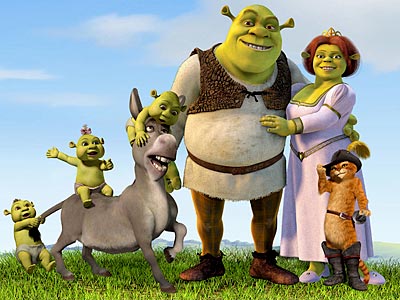
"Shrek" is an animated comedy film that was the first movie to win the "Best Animated Feature" award at the Academy Awards. The movie is about an ogre named Shrek, a beautiful princess named Fiona, and Donkey-a chatty donkey.

While several family movies have been produced in the history of film, these aforementioned ones are some of the best-of-the-best. If you have a DVD player then you're ready to enjoy an evening of quality entertainment with your family.


__________________________

Wednesday, 4 August 2010

Forty billionaires to give away wealth


Forty American billionaires have pledged to give at least half of their fortunes to charity as part of a campaign by Bill Gates and Warren Buffett. Microsoft founder Gates and investor Buffett, who are worth a combined $90bn (£56.6bn), have persuaded 38 of their fellow billionaires to sign up.

The friends and philanthropists started The Giving Pledge last month.

Its aim is to persuade fellow billionaires to pledge the money to charity, either in their lifetime or after they die.

Buffett said: "We've really just started, but already we've had a terrific response.

"At its core, the Giving Pledge is about asking wealthy families to have important conversations about their wealth and how it will be used."

He added: "We're delighted that so many people are doing just that - and that so many have decided to not only take this pledge but also to commit to sums far greater than the 50% minimum level."

Those who sign the pledge are also invited to publish a letter explaining their decision.

Among the latest batch to have signed up is New York Mayor Michael Bloomberg, who is worth $18bn (£11.3bn).

In his letter Bloomberg wrote: "Making a difference in people's lives - and seeing it with your own eyes - is perhaps the most satisfying thing you'll ever do. If you want to fully enjoy life - give.

"And if you want to do something for your children and show how much you love them, the single best thing - by far - is to support organisations that will create a better world for them and their children."

Joining him is Star Wars Director George Lucas.

Lucas wrote: "My pledge is to the process; as long as I have the resources at my disposal, I will seek to raise the bar for future generations of students of all ages."

Others on the list include entertainment executive Barry Diller ($1.2bn, £775m), Oracle co-founder Larry Ellison ($28bn, £17.6bn), energy tycoon T. Boone Pickens ($1.1bn, £692m), media mogul Ted Turner ($4.8bn, £3bn), banker David Rockefeller ($2.2bn, £1.3bn) and investor Ronald Perelman ($11bn, £6.9bn).

They join Eli Broad, who made his money in property, venture capitalist John Doerr, media entrepreneur Gerry Lenfest and former Cisco Systems Chairman John Morgridge in supporting the effort.

The US has 403 billionaires, the most of any country, and all together they have a combined fortune of $1.3 trillion.

Mr Buffett himself pledged to give 99% of his wealth to good causes in 2006.

Gates and Buffet will now wine and dine other billionaires in an attempt to persuade them to follow suit.


__________________________


Thursday, 15 July 2010

Paul Allen commits majority of his wealth to philanthropy

Billionaire Paul Allen has taken his friend Bill Gates up on his challenge to publicly pledge the majority of his wealth to philanthropy.


Paul G. Allen, who is 57, said today that he plans to leave the majority of his $13 billion estate to philanthropy to continue the work of his foundation and to fund scientific research. It was also a way of marking the 20th anniversary of the Paul G. Allen Family Foundation, which he started in 1990 with his sister, Jo Lynn Allen, and has since given 3,000 grants totaling about $400 million.

A month ago, Bill and Melinda Gates and Warren Buffett began a public campaign to encourage other billionaires to make a "Giving Pledge," and donate at least half of their wealth to charity.

Allen said he has planned to do that for many years, but he had not gone public with his intentions until now.

"He and Bill have talked about this and he thinks it's a good idea to let people know," said David Postman, a spokesman for Allen at Vulcan. "He hopes that maybe it spurs other people to give and he's hoping there will be good things that come of it."

Allen said he wanted to make it clear that his philanthropic efforts "will continue after my lifetime," he said in a statement. "As our philanthropy continues in the years ahead, we will look for new opportunities to make a difference in the lives of future generations."

This year Forbes ranked Allen as the world's 37th richest person with a fortune estimated at $13.5 billion.

His total giving over the years has reached about $1 billion, reflecting eclectic interests in science, the arts and education, including nonprofits he founded: the Allen Institute for Brain Science and the Experience Music Project.

While Gates' charity has become global in size and ambition, Allen's has remained mostly local and personal.

"Since the beginning, our philanthropy has been focused in the Pacific Northwest, where I live and work," Allen said. "I'm proud to have helped fund great work done by non-profit groups throughout the region. But there's always more to do."

Allen has battled non-Hodgkin's lymphoma since his diagnosis last fall. He has finished chemotherapy treatments and has been been doing well, Postman said. Allen traveled to Africa recently, and has been "running businesses as much as he ever has. He stays intimately involved in the things he cares about."

Microsoft founders and future billionaires Bill Gates, left, and Paul Allen in Bellevue in 1981, when the company employed less than 100 people.

The Paul G. Allen Family Foundation also announced $3.9 million in funding to 41 nonprofit organizations in the Pacific Northwest, focused largely on arts and culture.

The foundation gave Anniversary grants of $20,000 each to five individual founders of nonprofits, recognized as "change agents who created organizations that continue to deliver high impact programs for local communities."

The recipients are Rachel Bristol, founder and CEO of Oregon Food Bank; Bridget Cooke, founder and executive director of Adelante Mujeres in Forest Grove, Ore.; Jeanne Harmon, founder and executive director of the Center for Strengthening the Teaching Profession in Tacoma; Myra Platt and Jane Jones, founders of Book-It Repertory Theatre in Seattle; and Ken Stuart, founder and president of Seattle Biomedical Research Institute.

SOURCE: TED S. WARREN/ASSOCIATED PRESS/SEATTLE TIMES


Tuesday, 1 June 2010

Bail out Britain - all parties to the pump! - a political perspective by William Briggs


A bookmaker taking bets on what would be the main pull-quote from David Cameron’s first speech as Prime Minister would have given long odds against the phrase “This will not be a marriage of convenience” being the phrase which the media picked up and analysed at length. As inspiring opening statements by newly-elected leaders go, it doesn’t compete with minor examples of the genre such as John Major’s “I want to see us build a country that is at ease with itself”, let alone FDR’s “The only thing we have to fear is fear itself”, but it does acknowledge a current political reality. After four weeks of going out of his way to “agree with Nick” while also arguing that Nick’s policies on Europe and Trident would leave Britain a defenseless backwater, the sudden agreement between Liberals and Conservatives needed to be addressed in a way which disarmed cynicism.

The coalition may last the full five years or end prematurely amid calls for a snap election and accusations from each party about the other being unfit to govern. Either way, the coalition was forced on the two parties by an inconclusive election result that gave life to the theory that the electorate, disillusioned by the political class as a whole, voted the way they did because they positively wanted a two-party government. The ‘New Politics’ which began on May 11th, intended to be open-hearted and free from sleaze, was created amid great public goodwill and will need to maintain its central spirit of cooperation to maintain it. Not, then, a marriage of convenience but certainly a settling down between two singletons who had planned to remain bachelors for a lot longer. The first soundbite of the new government also meant that the headlines in the event of the coalition breaking up could be predicted years in advance - “Cameron and Clegg: the Messy Divorce”, “Clegg - ‘I’m Leaving You. It’s Over’”, etc.

Prior to his becoming Prime Minister, the debate around David Cameron centered on what kind of Conservative he would be when he took office. (And on whether he should be addressed as ‘Dave’ to remind people how matey he is or ‘David’ to remind people that he is fifth cousin to the Queen). Now, the debate centers on how his moderate conservatism will survive during a period when future short-term diagnoses for the British economy range from double-dip recession at worst to minimal growth at best.

On becoming Party leader, Cameron was widely believed to be a simple reincarnation of the worst, shallow aspects of Tony Blair, who just happened to be leading the opposing party. The Cameron persona at the time was that of a moderately handsome, moderately viewed politician, with a history in PR (to match Blair’s schooling in amateur drama and early attempts at being a rock star), with a nice young family, and an interest in the environment somewhat anomalous for a Tory. Over the course of five years he has not yet won unconditional support or affection from the public, but a more subtle political personality has emerged, as noted by both supporters and opponents.

The Labour left, and the majority of the left-wing press, welcomed Cameron’s election as leader in 2005 as the return of the Eton-educated Toff to the top of the Tory party, assuming that, in time, simple class antagonism would turn the public against him. So far that has not happened. Cartoonists may find it impossible to portray Cameron wearing anything other than top-hat and tails but so far the attack has been largely affectionate. That situation will change if the economy collapses further and the contrast between David and Samantha Cameron’s family fortune, which the Sunday Times Rich List estimates at £30 million plus, and the income of the average voter diverges even further. But for the moment the poshest Prime Minister since Sir Alec Douglas-Home appears to be safe from a class-war backlash and even to have tapped into the some of the ancient British love for the aristocracy.

The Right-wing media have had a harder time knowing what to do with their new man in Downing Street. Right-wing columnists such as Peter Hitchens have reacted to Cameronism as the final straw that has driven them away from the party altogether. Tory romantics such as Andrew Roberts have accused him of directly ripping his shtick from Harold Macmillan, i.e. using his privileged background as a cloaking device under which to push the country further to the left. To some extent this accusation is true. 2010 saw the first deliberately moderate, One Nation, Conservative election campaign in a generation. The result of this, when added to the unpopularity of the sitting government, was very nearly a full majority. In terms of social and foreign policy, Cameron has done much toward his stated aim of ‘detoxifying the Tory brand’ and in doing so has distanced himself from the more confrontational excesses of Thatcherism. Sections of his own party have offered mild rebellion over what they see as unnecessarily progressive policies on education, gay marriage and Europe. The general idea of the natural party of government sharing power with its opponents has also provoked rumbles of discontent. Far better to go it alone with in a minority government and gain support from the Ulster Unionists and whatever parts of the opposition have enough common sense to support us, say some constituency parties and members of the 1922 Committee.

The silencing of the Liberals and the defeat of Labour has created the unusual possibility for the new Prime Minister that at first his most effective opposition will come from internal dissent. The two most notable features of Cameron’s first few weeks at Prime Minister's Questions were the body language between himself and Nick Clegg (supportive but cautious and tense, as one might expect), and questions from Conservative backbenchers enquiring whether the coalition would care to start acting like a right-wing government (repeal the Human Rights Act, reform the House of Lords, hold a ‘bonfire of the QUANGOs’ etc). Internal opposition is likely to dog Cameron in one form or another, as it does every party leader, and it is not yet entirely clear what his various self definitions (a "liberal Conservative", "not a deeply ideological person”, "a modern, compassionate conservative") actually mean in practice. But the fact remains that no other viable candidate for national leader currently exists and, for the time being, for any Conservative, or for that matter Liberal, serious about the idea of power, Cameron’s leadership is the only game in town.

Barring electoral reform re-emerging as a popular issue as it did during the election campaign, it is the state of the economy that is likely to dictate the amicability between the two coalition partners and the popularity of the government as a whole. At the time of writing, the program of tax-increases and public spending cuts, conceded as a necessity by all three main parties, is just beginning. (The term used to take the sting out of this is ‘fiscal adjustment’. Get used to hearing it.) The first sign of the new spirit of fiscal conservatism came with the announcement of the new Cabinet. As with Margaret Thatcher’s first government, Ministers keen on reductions in public spending were placed in key positions, such as Iain Duncan Smith at Work and Pensions and Liam Fox at Defence and, briefly, David Laws as Chief Secretary to the Treasury. Vince Cable’s admission, after only three days in government, that he would in fact have to go against his party’s manifesto pledge and oversee large cuts in public spending, officially because of the effect of the Greek crisis on the European economy as a whole, also acted as handy public neutering of the leading Liberal seen as having the finest mind in the government.

The fiscal adjustment process will obviously be unpleasant but, in another contrast with early Thatcherism, the government looks set to acknowledge the potential pain they will cause. Chancellor George Osborne has set out £6.2bn of cuts on what he calls "wasteful spending"; there will also be £20bn cut in welfare and pensions over the next five years and a public sector pay freeze for those earning more than £18’000 a year which is likely to extend into 2011. Amongst the talks of painful cuts and rises in VAT to pay off spiraling national debt, the Coalition has also signaled that it will be interventionist where necessary. The earliest sign of this was the announcement that a £20 million grant awarded by the previous government to Nissan’s Sunderland plant to develop the next generation of electric cars will still be honored The early weeks of the coalition also saw the unusual sight of Conservative ministers talking about the need for government to stimulate industry and manufacturing. This may prove to be a simple political gimmick. No British politician has spoken in favour of denuding the manufacturing base but plenty have done so. It will be interesting to see what the promise amounts to, particularly in the North East and North West, traditionally anti-Conservative areas where the need for manufacturing jobs is great but support for the new government is low.

Her Majesty's Most Loyal Opposition, meanwhile, are determined to engage in a civilized post-defeat, leadership election which will be a “chance to help shape Britain’s progressive future” according to interim Leader Harriet Harman. Four former cabinet ministers - Ed Balls, Andy Burnham and David & Ed Miliband - and one feisty backbencher - Diane Abbott - will fight for the future of the people’s party over the course of a fifteen week contest. Historically, the script for Labour leadership races consisted of a series of dirty tricks and deep ideological divides, conducted in confrontational and public way which scared many voters away from the party for a generation. Post-New Labour, lessons appear to have been learnt about keeping rows private and, so far, the atmosphere between the candidates has been competitive but collegial. The central question of the process will be how the party can reposition itself against a Coalition which now occupies much of the ground between the centre-right and centre-left of British politics. It remains to be seen whether or not for Labour 2010, like 1992, could be considered a good election to have lost, thus avoiding being in power during an inevitable period of government unpopularity. According to the Office for Budget Responsibility, outgoing Chancellor Alistair Darling's prediction of 3% economic growth for 2010 were wildly optimistic and minimal or negative growth for the year is a real possibility. Far better to have created that situation than to have to deal with it. The ultimate irony, the electorate returning to Labour because the new government cannot deal with the mess that Brown and co. created, may be the best hope they have of avoiding an extended period in the wilderness.


Copyright (c) 2010, Independent News Ltd.

Tuesday, 24 November 2009

YAZZ-tastic - 80's pop princess finds God!


Singer Yasmin Evans finds peace through her faith.


"The only way is up!" promised the bleach blonde model turned singer in the summer of 1988, which she soundtracked with her international smash, becoming one of the UK's biggest music stars. But what happened to Yazz? We caught up with her and found out the music industry can go down as well as up.

That was then...

Born to a Jamaican father and English mother in London in 1960, Yasmin Evans was an unmistakable regular on the catwalk before being blinded by the giddy lights of pop fame. She scored a number of underground hits with Biz during the mid-‘80s. But her big break really arrived in 1988, when she supplied the vocals to Coldcut's pioneering, monster club smash ‘Doctorin' The House' (Watch the video on YouTube), hitting the UK top 10.

Later that summer, she launched a solo career under the name Yazz and the Plastic Population, releasing debut single ‘The Only Way Is Up' (Watch the 'Top Of The Pops' performance on YouTube). It went on to spend five weeks at the top of the UK chart and became the biggest hit of the year. Follow-up ‘Stand Up For Your Love Rights' went to number two, while ‘Wanted', the accompanying debut album, narrowly failed to hit the chart summit.

In 1989, Yazz made the top for the last time with ‘Fine Time' and had a minor hit in 1990 with ‘Treat Me Good', before hooking up with Aswad on ‘How Long' three years later. Her second album, ‘One On One', came out the following year to limited success, by which point Yazz had grown disillusioned with the music business. "My creative resources were drying up from the treadmill of promoting. So I began looking to other directions for fulfilment," she tells Yahoo! Music.

This is now...

Now 49, Yazz takes up the story from her new home in southern Spain. "I decided to come out of the business and try to get my head sorted. I was pretty messed up. I began a search for faith, winding through all the roads from Buddhism to New Age. It was a long sojourn but I thank God for it as truth must be found...about two years later I found it! And I became a committed Christian and life has been awesome since!"

And what has she been doing in recent years? "I travel to invited events, missions, prisons to present a story called 'Fame 2 Freedom'. Through singing songs from my latest album (Listen to 'Running Back To You' on Yazz's official website) and using interactive visuals and a band or acoustic set up, I present one woman's journey to find faith. They are fantastic evenings, intimate, fun and challenging!"

Yazz has also recorded a contemporary gospel album and teaches at professional singing workshop classes. She is currently preparing more new material alongside "a little book of women's stories that I have met along my travels. Unsung heroes I call them! Outstanding articles about women of faith and how their faith has carried them through intense storms," she explained. With so many projects on the go, a full comeback to the pop frontline seems unlikely, as she admitted: "Mmmmmm, let me think...I don't have time!!!"


__________________________